
Why Your Business Needs the Right Commercial Room Dividers
Commercial room dividers shape how your space works day after day, not just how it looks on a floor plan. When every square foot carries real cost and revenue potential, the way you split, buffer, and reconnect areas will either support your business model or fight against it.
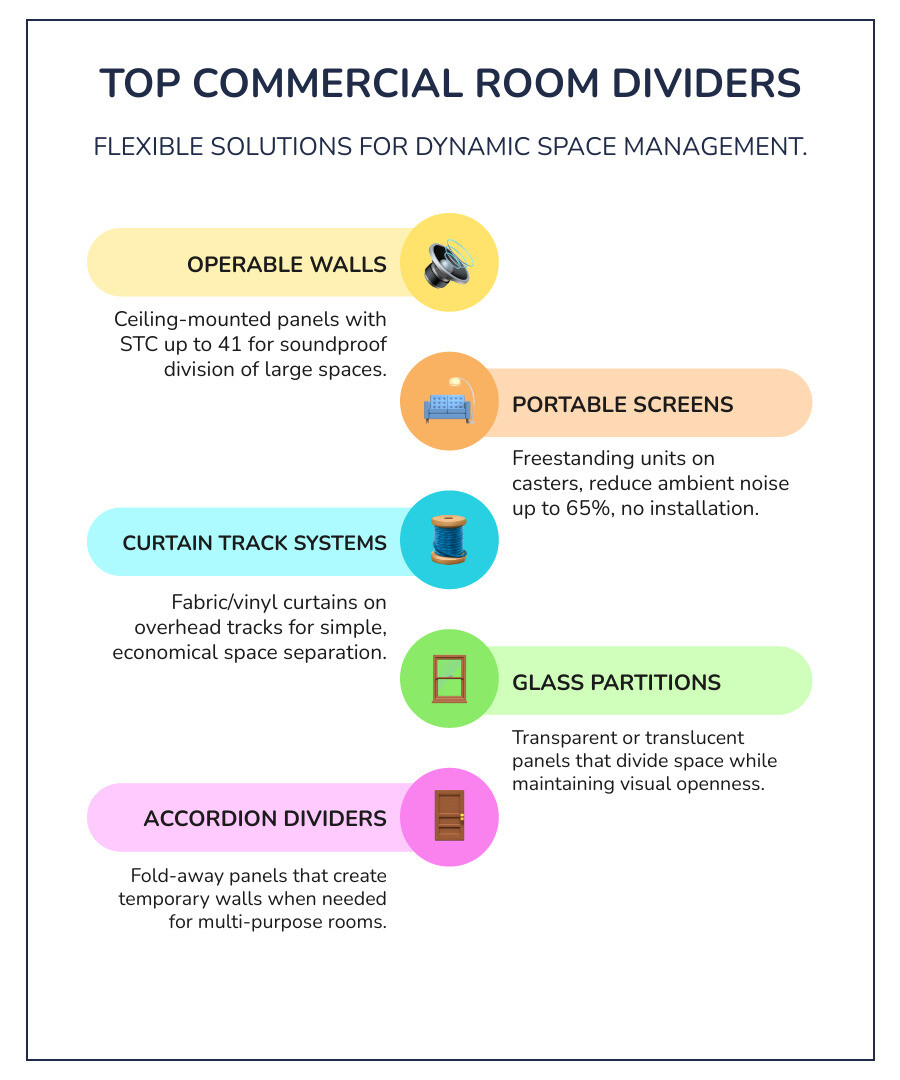
- Operable Walls: Ceiling-mounted panels with STC ratings up to 41 that create quiet, private zones for meetings and events
- Portable Screens: Freestanding units on casters that one person can reposition to redirect foot traffic or carve out focus areas
- Curtain Track Systems: Fabric or vinyl curtains on overhead tracks that glide open and closed for rapid reconfiguration
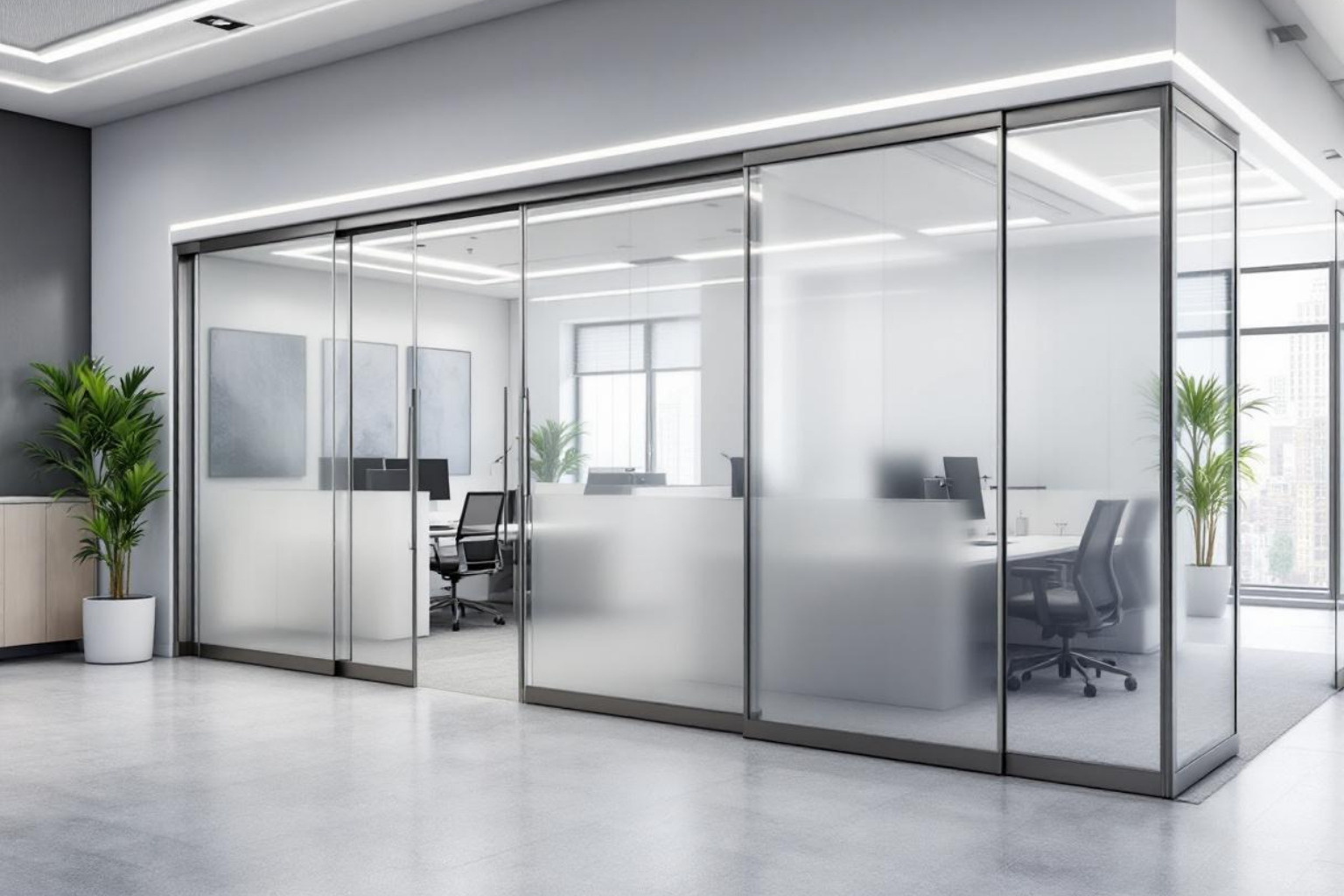
- Glass Partitions: Transparent or translucent panels that maintain sightlines while guiding how people move and interact
- Accordion Dividers: Fold-away panels that tuck out of the way when you need full-span open space
Rigid construction fixes your layout in place and locks in one way of working. Commercial room dividers give you a flexible framework so your space can evolve with hiring cycles, new services, or changing customer demand. When you can expand or compress work zones in minutes, the same footprint handles training in the morning, client meetings in the afternoon, and team collaboration in the evening.
The market gives you scalable solutions that range from heavy operable walls on precision ceiling tracks to nimble portable screens that glide across the floor on casters. Some rooms need near-drywall sound isolation for contract discussions, while others benefit more from semi-open divisions that gently shape traffic and reduce visual clutter. Your choice of system depends on how people actually use the room, the structural capacity of your building, and how frequently you plan to change layouts.
Over 14 years, we at SBI Contracting have coordinated countless commercial room divider installations across facilities throughout the Pacific Northwest. That experience lets us match acoustic performance, hardware design, and material finishes so your dividers feel integrated with your building rather than an afterthought.
The Power of Division: Why Your Business Needs Flexible Spaces
When we talk about commercial room dividers, we are really talking about control. You gain the ability to dial in privacy, acoustics, and flow without ripping out walls every time your business shifts. That control translates into lower long-term costs and a space that keeps working for you instead of against you.
Construction fixes decisions that you might outgrow in a year. Framing, drywall, paint, and flooring changes consume budget and put parts of your building out of service. Flexible room dividers avoid that disruption. You reconfigure rather than rebuild, so your capital goes into growth instead of demolition and patchwork.
Once dividers are in place, the savings keep compounding. When you can reassign zones in a morning instead of planning a renovation, your space stays aligned with real workloads, team sizes, and client traffic. A room that hosts a product demo at 10 a.m. can handle training by 1 p.m. and a private strategy session at 3 p.m. That type of turnover makes every square foot work harder.
Noise control turns into a direct productivity lever. Open-plan offices and busy educational or healthcare facilities carry a constant layer of sound. High-performance commercial room dividers absorb or block that sound so phone calls feel calmer, video meetings run cleaner, and private conversations stay private. The acoustic difference reduces fatigue and helps people maintain focus for longer stretches.
The visual impact deserves the same attention. Modern dividers do more than hide clutter. They introduce texture, color, and rhythm into large interiors while aligning with your brand. You might run glass panels that capture daylight along a corridor, or fabric-covered partitions that echo your company palette. When the division system feels intentional, visitors read it as part of the design language rather than a temporary fix. For more ideas on how movable systems reshape daily workflows, you can explore our perspective on Movable Walls Benefits.
Defining Zones for Focus and Collaboration
Commercial spaces rarely serve a single purpose anymore, and that shift puts real pressure on layout decisions. Flexible division systems answer that pressure by helping you draw clear lines between focus, collaboration, and circulation without sacrificing openness.
You might take one large floor plate and break it into a chain of zones that flex during the day. In the morning, operable walls close to form quiet rooms for deep work or confidential calls. By midday, you can slide panels away to build a wider collaboration area with portable dividers steering small breakout groups. Later, you may open portions fully for an all-hands session while leaving side pockets intact for one-on-one conversations.
This kind of zoning uses commercial room dividers as both physical and behavioral cues. When people see a semi-enclosed nook with higher acoustic performance, they naturally choose it for heads-down work. When they see a glass-partitioned huddle space with writable surfaces, they gravitate toward it for quick standup meetings. The environment itself suggests the right behavior and keeps different work styles from clashing.
Your layout decisions then move beyond square footage counts into time-based planning. You start to ask how each divider position supports the rhythm of your team across a full week, and that mindset produces stronger use of every room. Our approach to Partition Wall Construction focuses on building in this kind of flexibility from the beginning.
Adapting to Modern Workplace Demands
Work patterns keep changing, and fixed walls rarely keep pace. Commercial room dividers respond to those shifts with a toolkit that supports health, hybrid schedules, and multi-purpose programming without new construction every time your needs change.
Social distancing requirements showed how quickly layouts must adapt. Curtain track systems and portable screens let you create distanced queuing lines, staggered seating, and shielded workstations in days instead of months. When guidelines adjust, you slide or roll the dividers into new positions and restore capacity without a remodel.
Hybrid work adds another layer. On high-attendance days, you can pull operable walls to open large collaboration hubs and training rooms. On lighter days, the same areas can be broken into smaller pods that give in-office staff quiet, controlled environments. That balance makes your real estate spend feel justified regardless of how many people come in on a given day.
Multi-functional space usage benefits just as much. A single open area can support a client seminar in theater-style seating, then convert into workshop tables subdivided with commercial room dividers for breakout sessions. In the evening, you might reset again into a reception layout. Because the division hardware carries the load, your staff spends less time wrestling with furniture and more time focusing on the event itself.
A Tour of Types: Finding the Perfect Commercial Room Dividers
Choosing among commercial room dividers starts with a sharper question than “what exists.” The better question is “how should different people use this same square footage at different times.” When you frame it that way, the characteristics of each divider type become a set of tools instead of a catalog list.
We think about each system in terms of permanence, acoustic behavior, and how quickly a small team can reset the space. That lens keeps the conversation grounded in daily operations. It also helps you avoid overspecifying in low-impact areas or undershooting performance where privacy and clarity matter most.
Operable Walls and Movable Glass Partitions
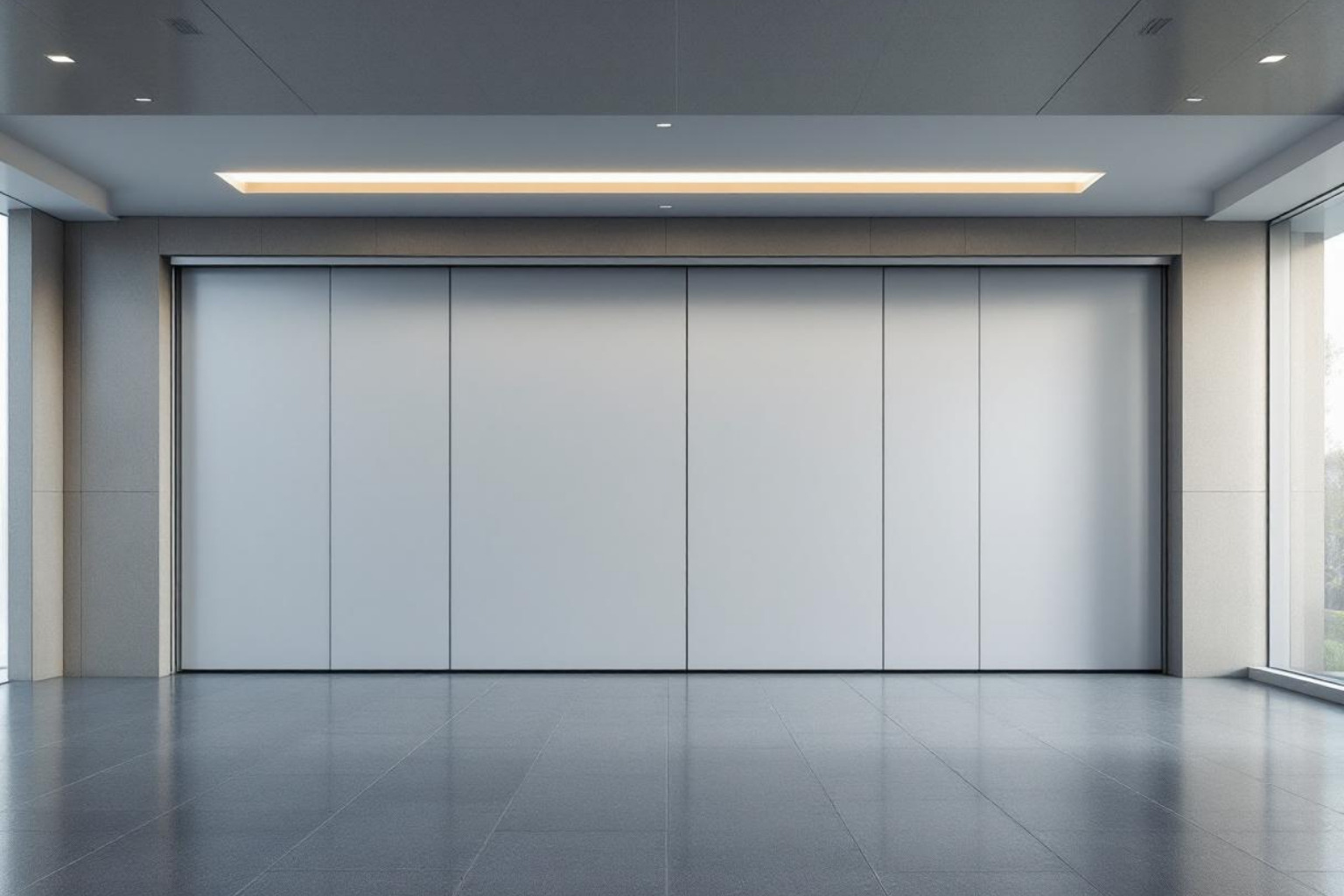
For rooms that host high-stakes meetings and revenue-generating events, operable walls stand out. These systems hang from engineered ceiling tracks, so your floor remains clean and continuous for carts, chairs, and accessibility. Individual panels glide along the track, then compress tightly at a stacking point when you want a full, open span.
Where speech privacy matters, you can count on tested metrics instead of guesswork. A standard interior drywall partition with insulation often lands in the mid-30s on the Sound Transmission Class (STC) scale. Woodfold’s Series 4100 (Hufcor) reaches an STC of 41, which moves conversational sound from easily intelligible to muffled and far less intrusive. That change shifts how people experience adjoining rooms during concurrent events.
Movable glass partitions bring a different set of strengths. They maintain sightlines and allow daylight to penetrate deep into floor plates, which helps reduce dependency on artificial lighting. Frosted or patterned glass maintains visual privacy where needed, and the hardware still allows panels to slide or stack to clear an opening.
When you pair solid and glass panels, you can frame views while hiding storage areas or back-of-house functions. We see strong results when clients treat operable and movable systems not as add-ons but as core architectural elements. Our resources on Operable Walls and Movable Walls walk through configurations that support that approach.
Portable and Freestanding Screens
Portable and freestanding screens work best where layouts shift quickly and frequently. Because they do not tie into structure, they avoid engineering reviews and can often be deployed immediately. Locking casters give you stability when screens are in place and easy movement when you need to reconfigure.
Function expands when acoustic cores and tackable surfaces enter the picture. A Screenflex Portable Room Divider, for example, carries a Noise Reduction Coefficient (NRC) of 0.65, which means it absorbs 65 percent of the sound energy that hits it across tested frequencies. That absorption trims echo and background noise in open rooms, while the tackable fabric lets teams pin up project boards or educational materials.
Single-person operation becomes a real advantage in training environments and schools. One staff member can roll out a nested stack of panels, unfold a zigzag configuration, and create multiple small-group areas along a gym floor. Afterward, the same person can collapse the system and park it against a wall, restoring the original footprint without maintenance support.
Curtain Dividers and Track Systems
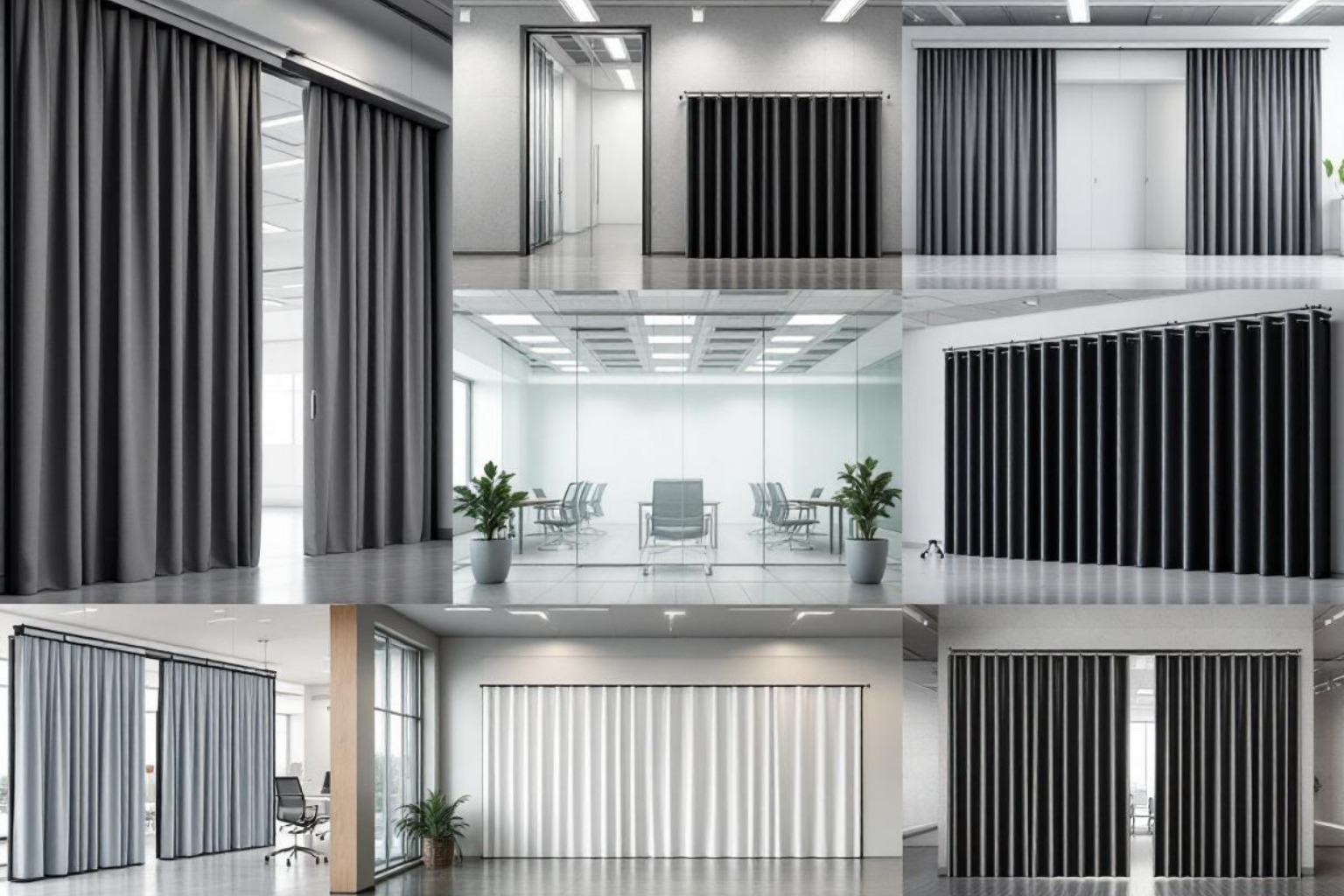
Curtain dividers and track systems prove their value where you need broad coverage, fast motion, and softer visual boundaries. Overhead tracks curve around corners, jog around columns, and run long, straight stretches, which lets you respond to real-world obstacles without complicated framing.
In gymnasiums, heavy-duty vinyl curtains can split a full court into two or three practice areas. The material slows down sound transmission and intercepts stray balls, while the simple pull or motorized movement returns the space to tournament mode. In healthcare environments, lighter-weight cubicle curtains create visual privacy, help define care zones, and support airflow where full-height walls would block it.
Material choice drives both performance and maintenance. Antimicrobial fabrics serve multi-bed medical rooms, washable vinyl works well in industrial and food-service settings, and textured weaves can soften the look of open offices. The International Building Code provides guidelines for fire-rated materials in commercial spaces, which helps you select compliant options. Our guides on Cubicle Curtain Tracks and Curtains and Picking the Right Gym Divider Curtain walk through the tradeoffs in weight, cleanability, and hardware.
The Selection Blueprint: Key Factors for Choosing Your Divider
When you select commercial room dividers, you are setting rules for how people will use your space for years. A clear framework helps you move from “what looks good” to “what will keep supporting daily work without friction.” We like to start with use cases, then move into acoustic targets, materials, and installation realities.
First, define the primary job of each divider zone. Some rooms need strong acoustic separation so confidential conversations stay contained. Others only need visual boundaries to direct movement and reduce distractions. Frequency of change matters too. If your staff plans to reconfigure every few days, systems that require tools or ladders will quickly fall out of favor.
Understanding Acoustic Performance in Commercial Room Dividers
Noise shapes how people feel in a space. With commercial room dividers, you can decide where sound should stop and where it should soften. Two metrics describe this behavior clearly: Sound Transmission Class (STC) and Noise Reduction Coefficient (NRC).
STC measures how well a barrier blocks airborne sound from moving through it. Higher numbers indicate stronger blocking. A typical interior partition without special acoustic detailing may land around STC 35. Woodfold’s Series 4100 (Hufcor) reaches STC 41, which means voices on the other side shift from clearly intelligible to faint and far less distracting. That performance supports boardrooms, legal conference rooms, and financial counseling spaces. The Series 3300 at STC 33 and the Series 2100 at STC 21 still create noticeable improvement over open-plan conditions, which makes them a strong fit for shared office areas where you want to tamp down background chatter.
NRC, by contrast, measures how much sound energy a surface absorbs instead of bouncing it back into the room. Values range from 0 for a fully reflective surface to 1 for a fully absorptive one. Screenflex Portable Room Dividers, with an NRC of 0.65, absorb 65 percent of incident sound in the tested frequency range. In practice, that means fewer lingering echoes and clearer speech in open classrooms, training centers, and multi-purpose halls.
When you combine high-STC dividers between rooms with high-NRC surfaces inside rooms, you create a layered acoustic strategy. Conversations stay contained where they need privacy, and the rooms themselves feel quieter and more controlled.
Material, Aesthetics, and Branding
Materials transform commercial room dividers from purely functional barriers into design elements. They influence how light moves, how sound behaves, and how your brand shows up in three dimensions.
Warm wood veneers bring richness to hospitality and corporate interiors, especially when grain direction, stain color, and panel scale echo nearby millwork. Fabric finishes introduce soft surfaces that absorb sound and let you pick from a wide color palette. Clear or frosted glass marks edges without making spaces feel boxed in.
Decorative metals and acrylics from manufacturers like Móz Designs introduce patterned surfaces that catch light and shadow in interesting ways. Felted panels from companies like TURF Design contribute strong acoustic absorption and can be cut into custom shapes. Each choice shifts how the divider feels to the touch and the eye.
Branding weaves through these decisions. You can embed logos as subtle frosted elements on glass, print gradients or photography on fabric panels, or select colors that align with your identity. When clients walk through your space, the dividers support the same story that your signage, digital channels, and printed materials tell.
Sustainability now plays a larger role too. Many divider systems offer recycled cores, low-emission finishes, or fully recyclable aluminum frames. By specifying these options, you align interior investments with environmental commitments.
Evaluating Installation and Maintenance for Your Commercial Room Dividers
Installation and maintenance shape how reliable and user-friendly your dividers feel over time. Portable screens arrive ready to deploy, so your team can start using them right away. Operable walls and movable glass partitions, on the other hand, rely on precise alignment and well-anchored tracks.
For tracked systems, we verify ceiling structure and coordinate with other trades to avoid conflicts with sprinklers, lighting, and HVAC. Our Operable Wall Installations process ensures that panels move smoothly, seals engage properly, and stacking areas integrate cleanly with architectural features. Woodfold accordion doors, for instance, tie into joists or structural elements differently depending on whether the ceiling uses drywall, suspended grid, or exposed framing.
Once everything is in service, care remains straightforward. Vinyl, laminate, metal, and glass surfaces wipe clean with mild cleaners and a damp cloth. Fabric panels benefit from periodic vacuuming or spot treatment. Moving parts like casters and trolleys respond well to occasional inspection and adjustment. When you follow manufacturer maintenance guidelines, including those for Set Up and Maintain Hufcor Operable Partitions, your commercial room dividers keep performing reliably for years.
Transform Your Space with the Right Partner
Choosing commercial room dividers becomes much easier when you work with a team that lives in this product category every day. We translate your use cases, acoustic goals, and brand direction into a coordinated system that feels built-in, not bolted on.
With 35 years of Division 10 experience, we at SBI Contracting guide clients throughout the interior Pacific Northwest from early concept through final adjustment. We pay attention to how each door, track, and panel interacts with your structure so you gain flexibility without sacrificing reliability. The result is a layout that reconfigures willingly when your needs shift.
Whether you want operable walls for a convention center, portable screens for a growing office, or curtain systems for healthcare or athletic facilities, we walk through options with clear performance data and real-world examples. Your team ends up with commercial room dividers that reduce noise where you need quiet, open quickly where you need flow, and hold up under daily use.
We focus on delivering durable, coordinated solutions that give your space a long, productive life. When you are ready to see how intelligently planned division can lift the performance of your building, we are ready to help you design and implement the right mix of systems. Contact us to transform your space and explore what thoughtful commercial room dividers can do for your business.